







 Articles
 - Efftect of sintering parameters on the performance of low expansion glaze using for the electric porcelain
Xueqing Yanga, Zhixing Denga, Jiansheng Zhaa, Jieguang Songb,*, Yue Liua, Changquan Yanga, Jiangping Liaoc, Ziyi Chena and Qijun Chenc
aSchool of Materials and Chemical Engineering, Pingxiang University, Pingxiang 337055 China
bCollege of Innovation and Entrepreneurship, Pingxiang University, Pingxiang 337055 China
cJiangxi Baixin Electric Porcelain Electrical Co., Ltd, Pingxiang 337000 ChinaThis article is an open access article distributed under the terms of the Creative Commons Attribution Non-Commercial License (http://creativecommons.org/licenses/by-nc/4.0) which permits unrestricted non-commercial use, distribution, and reproduction in any medium, provided the original work is properly cited.
The traditional electric porcelain glaze, widely used today, still exhibits significant limitations in core performance indicators such as mechanical strength and thermal shock resistance, making it challenging to fully satisfy the high standards and demanding operating conditions required by modern power equipment for insulation materials. This paper presents conclusions that the addition of zinc oxide to the glaze does not alter its stability but optimizes its performance, enabling the creation of a low expansion glaze. The hardness of both types of glazes increases as the sintering temperature rises; the maximum Vickers hardness for low expansion glazes can be achieved with sintering temperatures at 1200 ℃. The hardness of both glazes initially rises and then falls, peaking at 2 hours as the holding time extends. Increasing the heating rate leads to a decrease in glaze hardness and a significant increase in the thermal expansion coefficient; the lowest thermal expansion coefficient for the glaze occurs at a heating rate of 3 ℃/min. When the sintering temperature is 1200 ℃, the holding time is 2 hours, and the heating rate is 3 ℃/min, the performance of the added ZnO glaze prepared reaches its peak. The Vickers hardness is 548.9HV, and the thermal expansion coefficient is 1.7×10^-6/K, respectively.
Keywords: Electric porcelain, Low expansion glaze, Sintering parameters, Vickers hardness, Thermal expansion coefficient.
With the rapid advancement of ultra-high voltage transmission technology and the large-scale integration of new energy into the grid, power electronic equipment demands more rigorous performance from ceramic insulators, particularly in terms of thermal stability and mechanical reliability [1, 2]. Porcelain insulators, as critical support and insulation components of the power system, are indispensable and their performance directly affects the operational stability and safety of the power system. The dust pollution generated during the production of high-voltage electrical ceramics, along with the exhaust gases and solid waste emitted during high-temperature firing, have contributed to the degradation of atmospheric environmental quality. This includes frequent acid rain, significant road dust during non-precipitation weather, and issues such as drainage system blockages that disrupt daily life. As the greenhouse effect intensifies and global climate conditions worsen, environmental protection has garnered increasing international attention. The challenge facing the high-voltage electrical porcelain industry is how to effectively reduce pollution emissions, decrease energy consumption, achieve a harmonious balance between industrial operations and environmental protection, and explore paths towards sustainable development [3, 4].
As a key material for manufacturing high-voltage electric porcelain insulators, the performance of high-voltage electric porcelain glaze directly determines the insulation performance and mechanical strength of the electric porcelain. Electric porcelain plays a supportive and insulating role in the power system, needing to withstand multiple severe tests, including high-voltage electric fields, mechanical loads, harsh natural environments (such as wind, rain, ice, and snow, and industrial pollutants). High-voltage electric porcelain glaze is widely used in the manufacturing of high-voltage line insulators, power station electrical insulators, and other components. With the development of ultra-high voltage transmission technology, the performance requirements for high-voltage ceramic glazes are constantly increasing [5, 6]. The future development trends include that the high-performance, with further improvements in insulation performance, mechanical strength, and thermal stability, environmental adaptability, with enhanced corrosion resistance and anti-pollution performance to adapt to harsh natural environments, and resource utilization and cost control, by recycling industrial waste and optimizing raw material ratios, costs can be reduced to achieve sustainable development.
Low expansion glaze refers to ceramic glazes that have a relatively low absolute value of thermal expansion coefficient, this type of glaze is ideal for ceramic products requiring high thermal shock resistance [7, 8]. The low alpha value effectively reduces thermal stress caused by temperature gradients. In high-temperature environments, low expansion glazes demonstrate excellent stability, along with good mechanical properties and corrosion resistance. The glaze is widely used in the field of ceramic products that demand high thermal shock resistance, such as high-voltage electric ceramics and high-temperature furnaces. Its core advantages include outstanding thermal shock resistance, high strength, and corrosion resistance. These properties can effectively suppress the generation of thermal stress due to temperature changes, enhancing the mechanical strength and corrosion resistance of ceramic products. The use of environmentally friendly materials can significantly reduce pollution emissions during the production process [9, 10].
The purpose of this experiment is to investigate the effects of varying sintering temperatures, holding times, and heating rates on the properties of electric porcelain glaze, and to study the performance optimization of low expansion glaze for enterprise electric porcelain. The experiment analyzed the influence of these factors on the thermal expansion coefficient of the glaze, as well as the changes in the surface properties of the glaze layer (such as porosity, Vickers hardness, microstructure, etc.) after sintering, to determine the optimal sintering parameters for low expansion glaze. By systematically studying the influence of the sintering process on the properties of low thermal expansion coefficient of glaze, it is helpful to promote the widespread application of low expansion glaze in high-voltage electric ceramics and other fields. This experiment provides important data reference for the successful preparation of low expansion glaze.
Mix the original glaze slurry with zinc oxide and mineral powder in accordance with the predetermined ratio. Implement continuous stirring throughout the mixing process to ensure all components are thoroughly combined, with the stirring duration controlled at 100 minutes to achieve uniformity. Prior to mixing, calculations revealed that the water to material ratio of the original glaze slurry was 97%, a factor that directly influences the performance and sintering parameters of the subsequent slurry. Introduce zinc oxide powder into the glaze powder to attain a mass fraction of 3%, and ultimately obtain a slurry that satisfies the experimental requirements. Dry the prepared slurry and conduct a sieving operation on the dried powder to ensure its fineness, using a 200-mesh sieve. Finally, the sieved powder is filled into a mold of specified shape and size, and a specific pressure load is applied to complete the compression molding process. The glaze powder was pressed into a cylindrical body with a diameter of 5×25 mm under a pressure of 10 MPa, prepared 5 spare samples for each sample. After the sample is prepared,strict control is exerted over the three key process parameters of sintering temperature, holding time, and heating rate during the sintering process. By adjusting the combination of these parameters, the optimal sintering process conditions can be optimized and determined, thereby preparing high-performance low expansion glazes.
The Vickers hardness is a standard measure of material hardness. A higher Vickers hardness value directly indicates superior comprehensive mechanical properties (Type: HVT-10Z, China). The thermal expansion coefficient is the rate of relative length change of an object due to a unit temperature change under isobaric conditions. This experiment utilized a thermal expansion coefficient analyzer produced by the German company Nike to directly measure the thermal expansion coefficient of the glaze (Type: NETZSCH DIL 402, Germany). When conducting SEM (Type: SU8010, Japan) analysis, it is necessary to fracture the sintered sample and select a cross-section with typical characteristics. Use conductive adhesive to firmly attach the cross-sectional sample to the sample stage and place it in the scanning electron microscope chamber for observation of the microstructure of the glaze layer surface.
The influence of sintering temperature on the properties of electric porcelain glaze
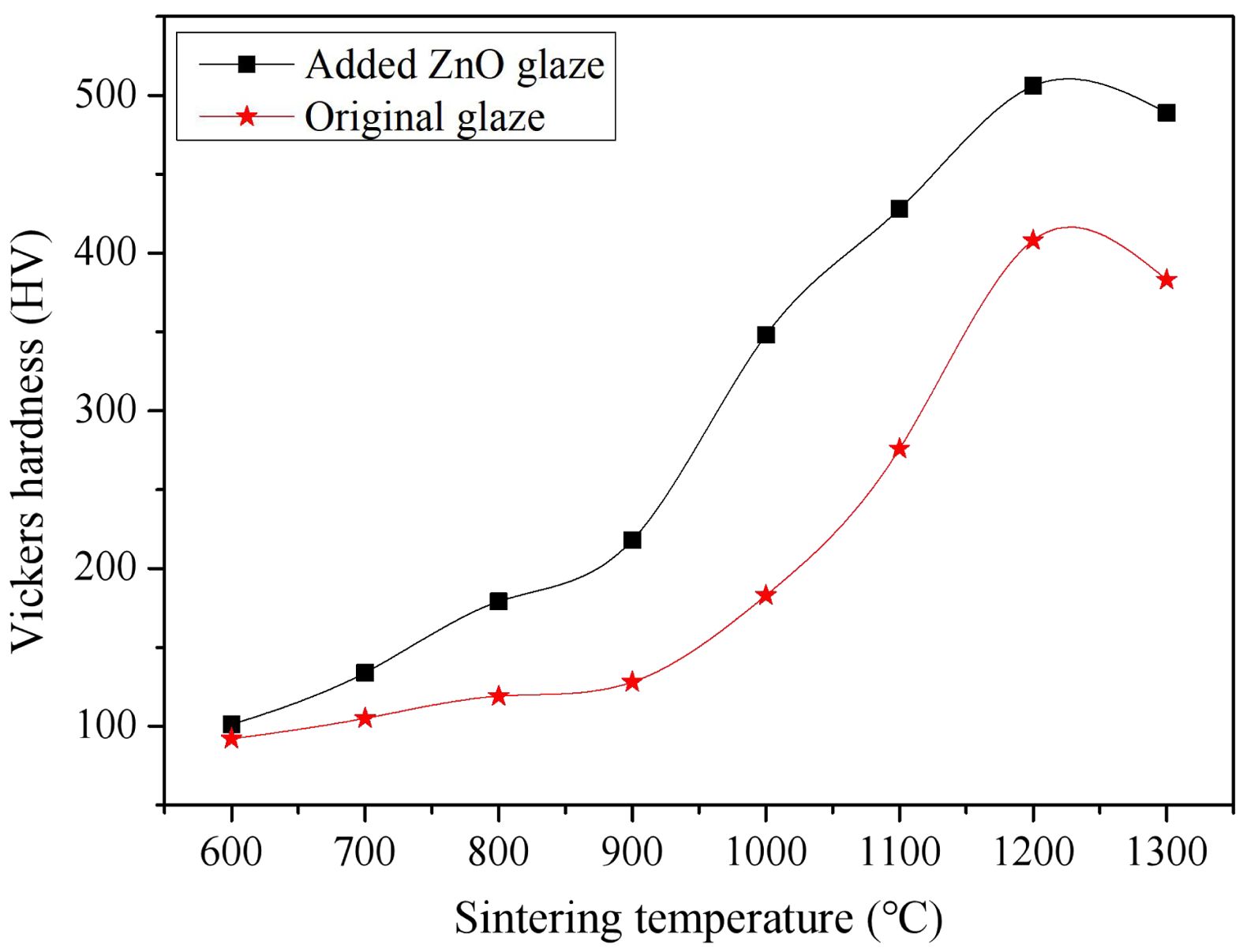
From Fig. 1, it is evident that as the sintering temperature rises from 600 to 1300 ℃, the performance of the glaze also enhances with the increasing of the sintering temperature before 1200 ℃. The hardness of the original glaze consistently remains below that of the added ZnO glaze. Notably, both the added ZnO glaze and the original glaze exhibit the significant alterationminimal change between 600 to 900 ℃ and the minimal change occurring from 900 to 1200 ℃. The maximum Vickers hardness for original glazes can reach 505.3HV, while the added ZnO glaze can achieve 527.6HV. When examining the curves, it becomes apparent that the surface hardness of the added ZnO glaze is superior at various temperatures. This suggests that the addition of 3% ZnO does indeed elevate the hardness of the glaze and enhance its physical properties. The reason for this is that during the sintering process, the certain components within the glaze melt and form a glass phase [11, 12]. This glass phase fills the interstices between the grains, resulting in a more complete structure of the glaze. Furthermore, an increase in sintering temperature results in more complete chemical reactions within the glaze. The reaction rate under high - temperature conditions is accelerated, enabling the formation of more stable compounds. When the sintering temperature exceeds 1200 degrees Celsius, the surface Vickers hardness of the glaze exhibits a decreasing trend. This is because the sintering temperature is too high, leading to an excessive amount of liquid phase in the body, which causes the crystals to become coarse and internal pores to form easily.
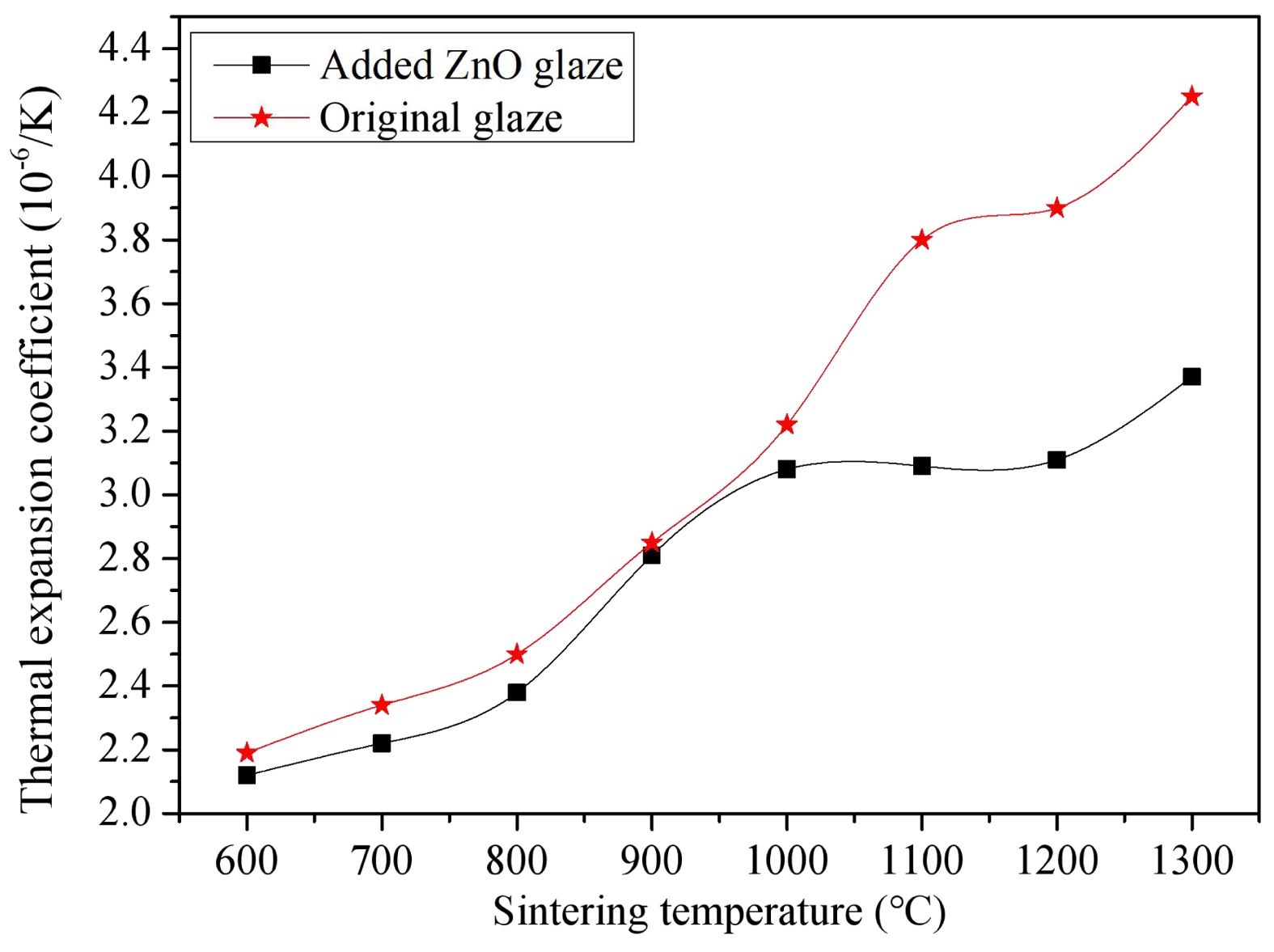
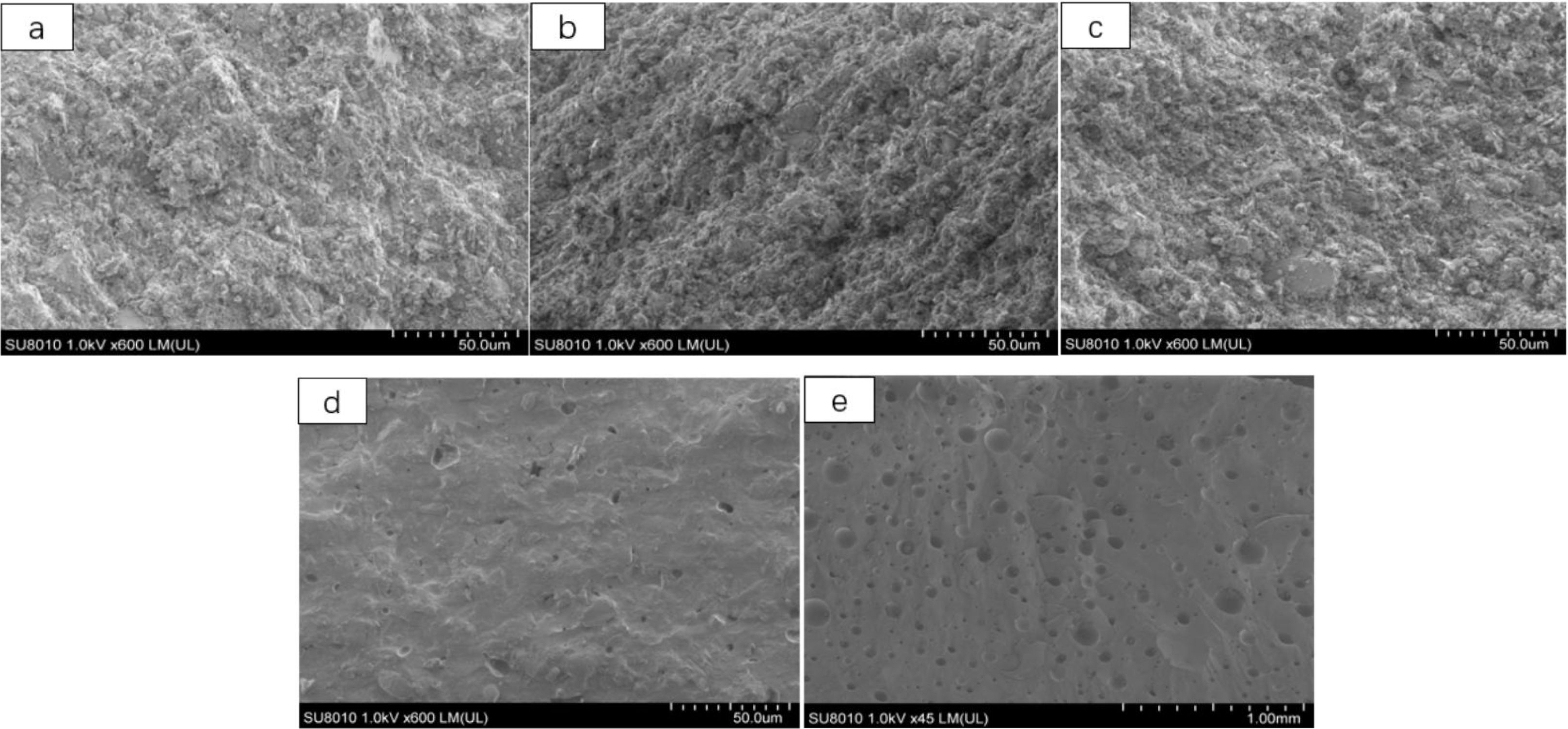
From Fig. 2, it is evident that as the sintering temperature rises, so does the thermal expansion coefficient of the original glaze produced by the enterprise. When the temperature surpasses 1200 ℃, the thermal expansion coefficient of the added ZnO glaze remains consistently lower than that of the original glaze. This is because ZnO effectively lowers the sintering temperature of the glaze, secondly, it facilitates the formation of the glass phase and curbs the loss of volatile components, and finally, it optimizes the microstructure of the glaze layer, enhancing the thermal stability of the glaze during both sintering and cooling processes (Fig. 3). During the cooling stage, the glass phase undergoes volume shrinkage, while it expands in the high-temperature range, leading to an increase the thermal expansion coefficient of the glaze. The rise in temperature fosters the growth and progressive densification of glaze grains, resulting in volume reduction. However, the generated glass phase may also experience excessive melting, causing overall structural looseness.
The influence of holding time on the performance of electric porcelain glaze
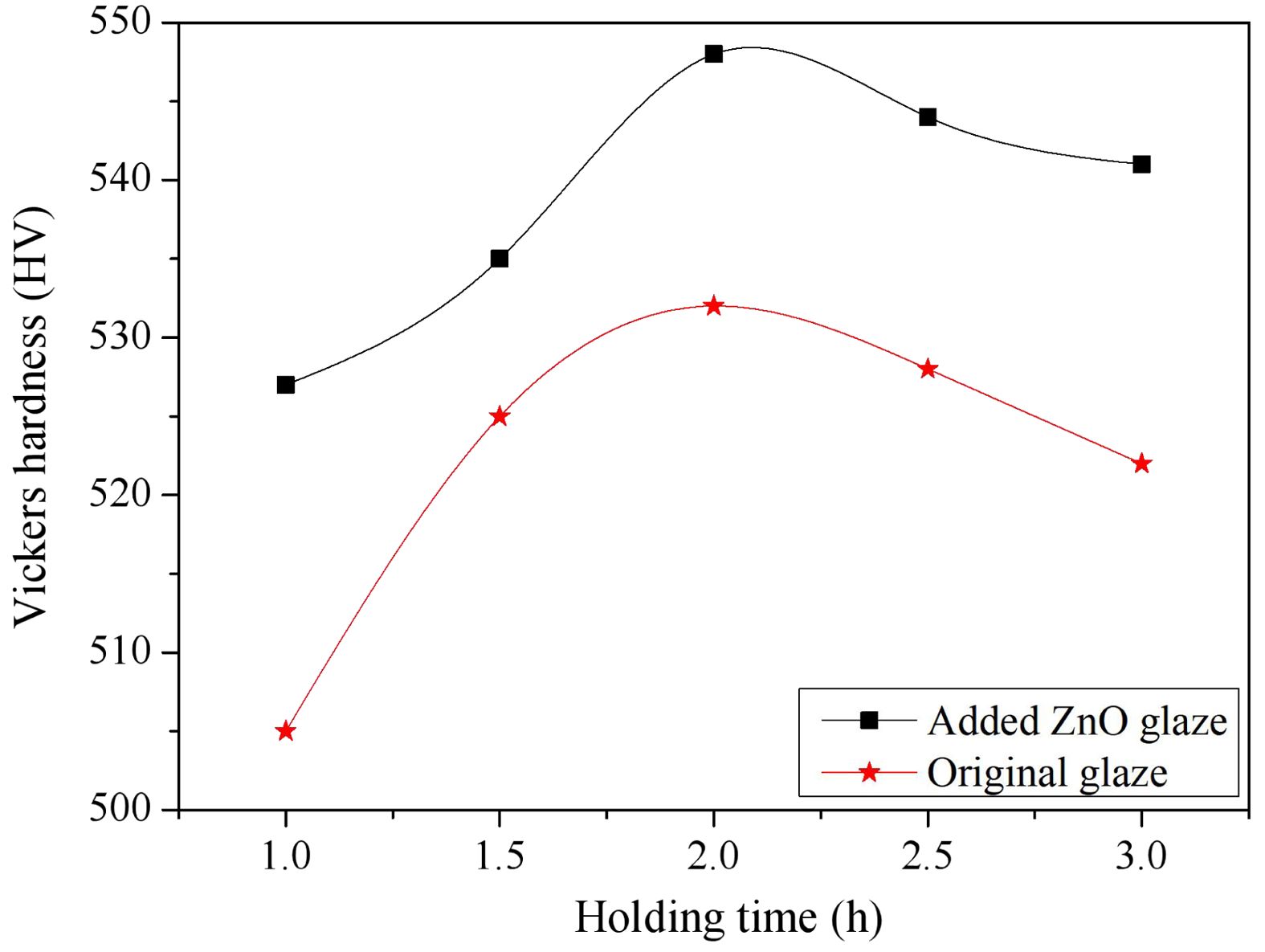
From Fig. 4, it is evident that as the holding time increases, the Vickers hardness exhibits a trend of initial increase followed by a decrease. This phenomenon occurs because that the particles within the glaze start to crystallize and the grains gradually as the holding time extends enlargein the early stages of sintering. These larger grains are packed more tightly and resulting in a more compact structure of the glaze. Concurrently, the pores and voids within the glaze diminish during the sintering process. As the holding time progresses, the contact area between particles expands, pores are eliminated, the density of the glaze increases, and consequently, the hardness rises, the hardness reached its peak after holding time for 2 h. The Vickers hardness of the original glaze was 532.1HV, while that of the added ZnO glaze was 548.9HV. Overall, the hardness of the added ZnO glaze surpassed that of the original glaze at all insulation time intervals, reaffirming the impact of zinc oxide in enhancing the hardness of glazes.
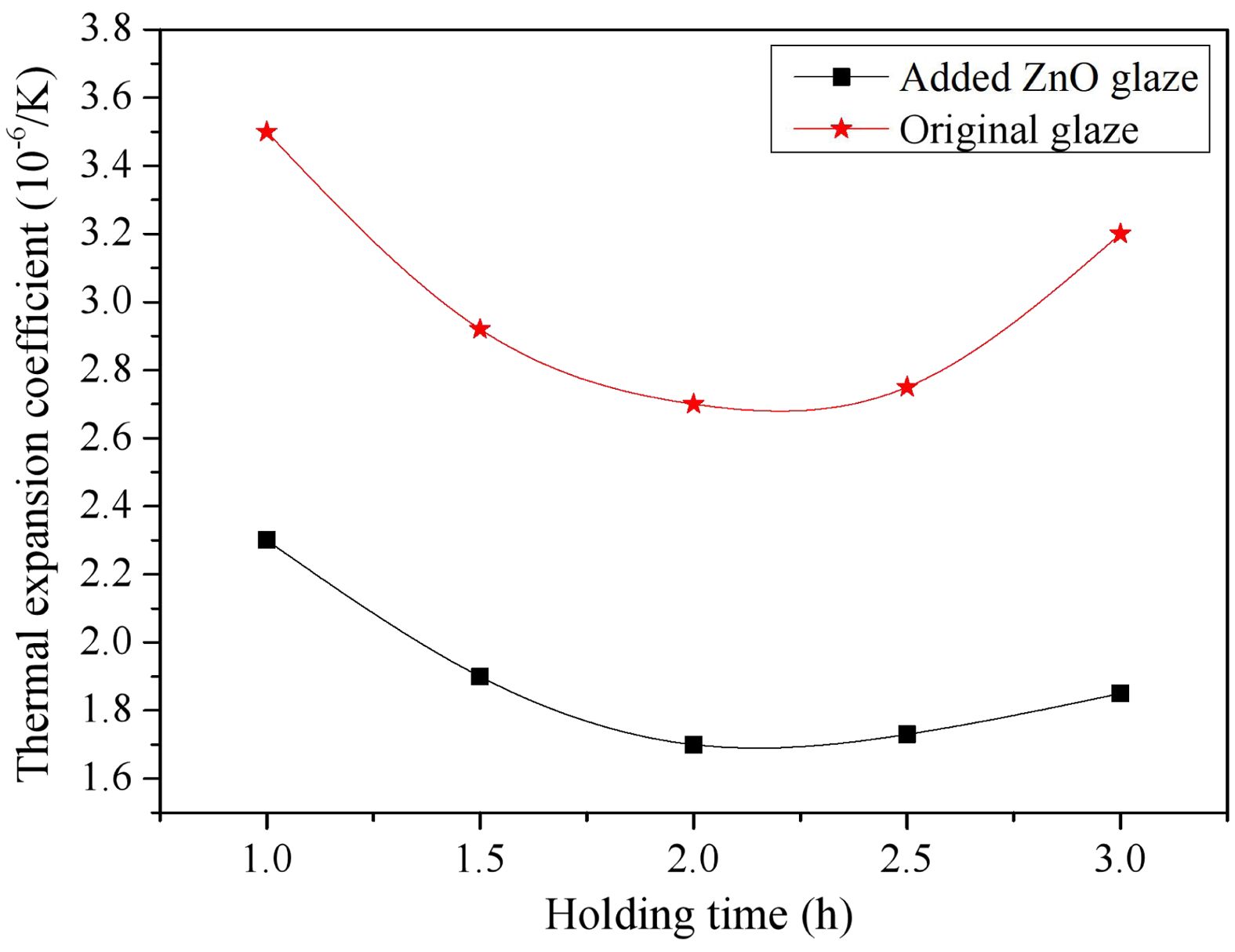
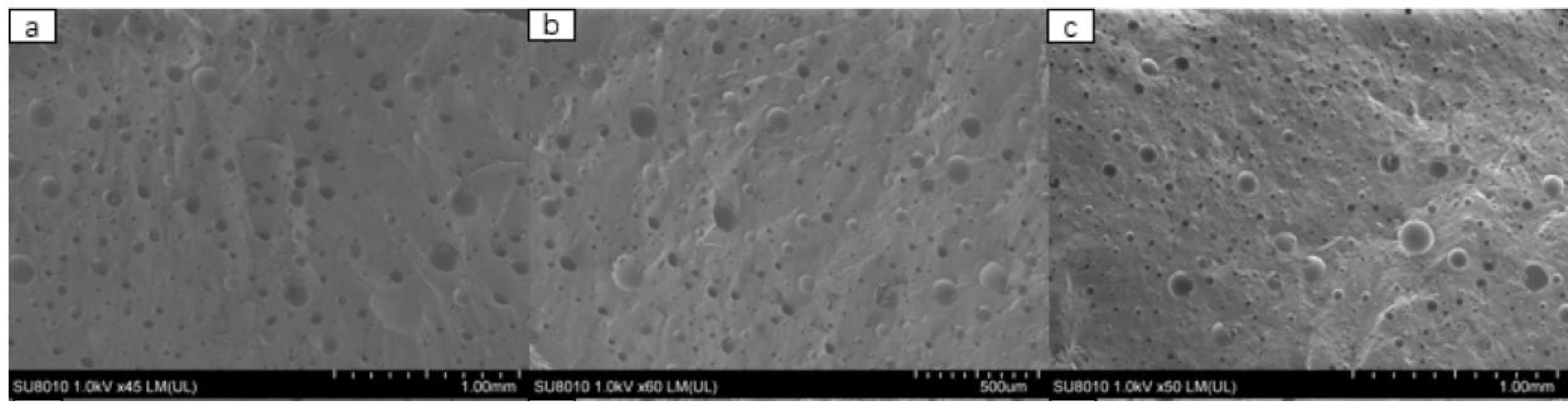
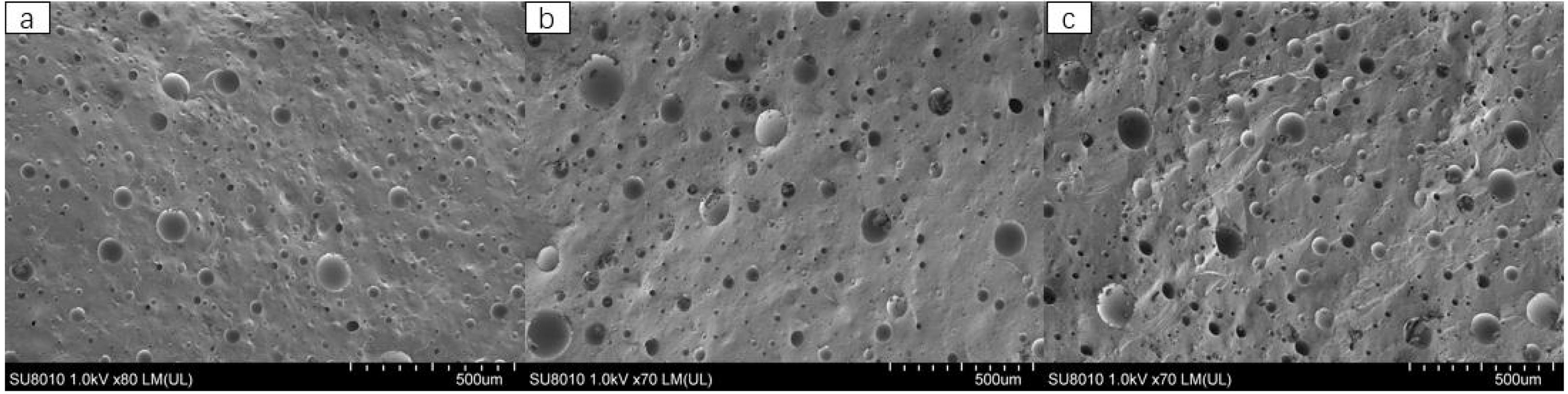
The thermal expansion coefficient of the two glazes vary at different temperatures and under various holding time in Fig. 5. A horizontal comparison reveals that as the holding time increases, the thermal expansion coefficient of both glazes diminishes. This occurs because some of the glaze melts and forms a glass phase during the sintering process. The glass phase experiences volume contraction as the temperature drops, however, the expansion of the glass phase results in an increased expansion rate of the glaze at elevated temperatures (Fig. 6). The distinct components within the glaze possess their own specific thermal expansion coefficient. The thermal expansion coefficient of these components contributes to a general increase in volume with rising temperatures. The high-temperature conditions can also expedite chemical reactions and potentially causing volume expansion [13, 14], the thermal expansion coefficient of the added ZnO glaze remains lower than that of the original glaze as the holding time for 2 h.
The effect of heating rate on the properties of electric porcelain glaze
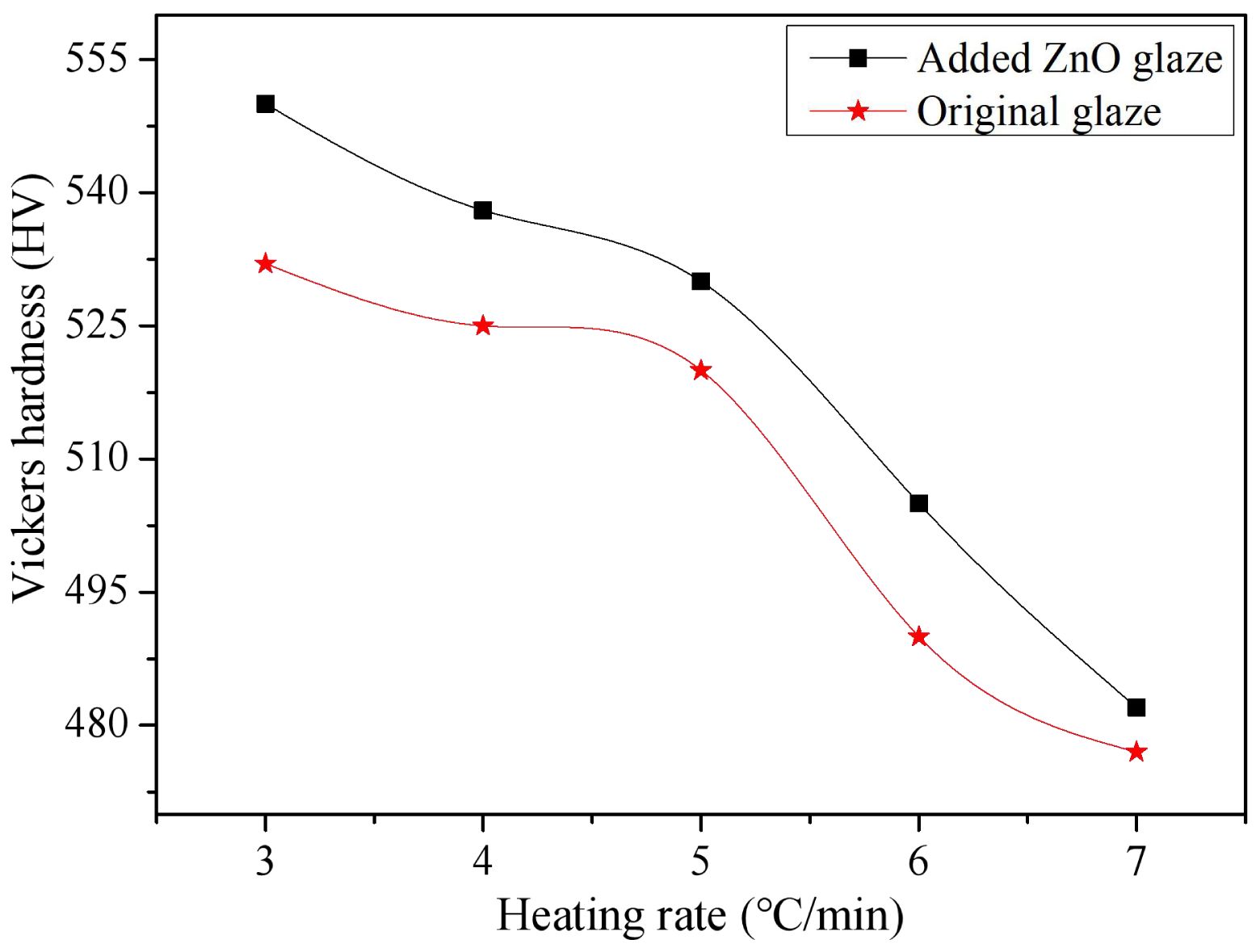
The Vickers hardness curves for both original and added ZnO glaze exhibit a downward trend as the heating rate increases in Fig. 7. This phenomenon occurs because rapid heating does not allow sufficient time for the glaze components to diffuse and recrystallize. Grain growth necessitates a specific duration and temperature, and while fast heating can elevate the glaze to a high-temperature state quickly, the grains may not have fully developed. During sintering, certain glaze components melt and create a glass phase. The formation of this phase requires a set temperature and time to ensure complete melting and uniform mixing of the components. A rapid temperature rise can lead to a rushed glass phase formation, resulting in an uneven chemical composition [15, 16]. Such an uneven glass phase fails to effectively fill the interstices between grains, leading to an incomplete glaze structure. Nonetheless, irrespective of the heating rate, the added ZnO glaze consistently exhibit higher hardness than the original glaze. This is attributed to ZnO, which enhances the uniformity of chemical reactions. It ensures that reactions within the glaze proceed evenly, reducing incomplete local reactions. Even under conditions of rapid heating, zinc oxide maintains the uniformity of chemical reactions, thereby increasing hardness. Consequently, ZnO significantly improves the performance of glazes.
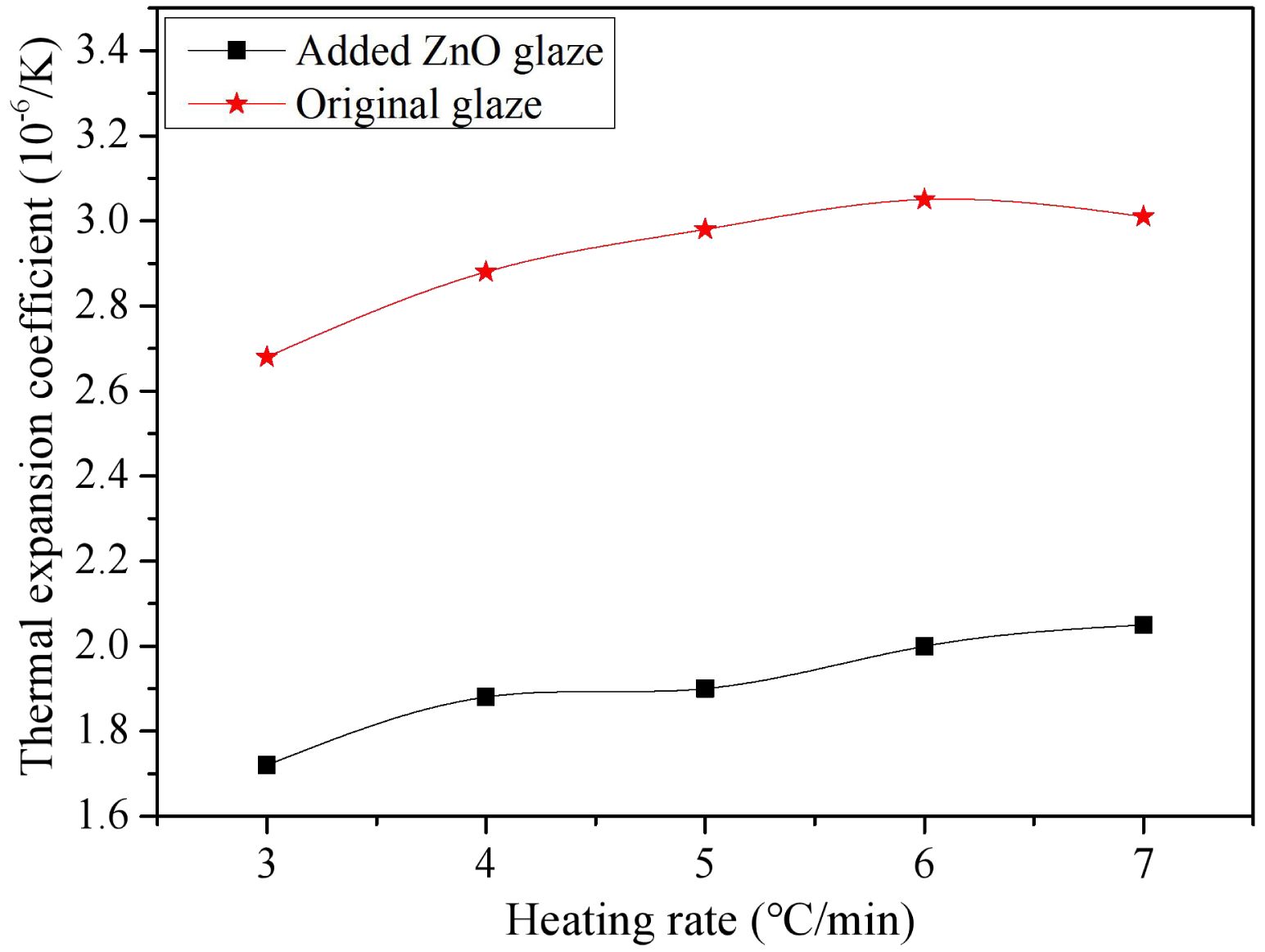
The thermal expansion coefficient of the two glazes vary with temperature at different heating rates in Fig. 8. The graph clearly shows that as the temperature rises, the thermal expansion coefficient of both glazes generally increase, a phenomenon associated with the volatilization of their chemical components at high temperatures and the formation of uneven structures due to the melting of the glass phase (Fig. 9). In the figure, the curve is distinctly divided into two segments that the upper segment, which exhibits a higher thermal expansion coefficient, consists of original glaze, whereas the lower segment, with a lower thermal expansion coefficient, is composed of low expansion glaze. At a heating rate of 3 ℃/min, the thermal expansion coefficient of the ZnO glaze is at its lowest.
|
Fig. 1 Effect of sintering temperature on the Vickers hardness of the glaze. |
|
Fig. 2 Effect of sintering temperature on the thermal expansion coefficient of the glaze. |
|
Fig. 3 Effect of sintering temperature on the microstructure of the added ZnO glaze (a-600 ℃, b-800 ℃, c-900 ℃, d-1200 ℃, e-1300 ℃). |
|
Fig. 4 Effect of holding time on the Vickers hardness of the glaze. |
|
Fig. 5 Effect of holding time on the thermal expansion coefficient of the glaze. |
|
Fig. 6 Effect of holding time on the microstructure of the added ZnO glaze (a-1h, b-2h, c-3h). |
|
Fig. 7 Effect of heating rate on Vickers hardness of the glaze. |
|
Fig. 8 Effect of heating rate on the thermal expansion coefficient of the glaze. |
|
Fig. 9 Effect of heating rate on the microstructure of the added ZnO glaze (a-3 ℃/min, b-5 ℃/min, c-7 ℃/min). |
This article details the process of enhancing the original glaze from an electric porcelain factory by incorporating zinc oxide. The glaze is mixed with zinc oxide and mineral powder in specific proportions and stirred. The resulting mixture's hardness, porosity, and expansion rate were assessed under varying sintering temperatures, holding times, and heating rates. The following conclusions were drawn that the addition of zinc oxide to the glaze does not alter its stability but optimizes its performance, enabling the creation of a low expansion glaze. The hardness of both types of glazes increases as the sintering temperature rises, the maximum Vickers hardness for low expansion glazes can achieve with sintering temperatures at 1200 ℃. The hardness of both glazes initially rises and then falls, peaking at 2 hours as the holding time extends. Increasing the heating rate leads to a decrease in glaze hardness and a significant increase in expansion rate, the lowest expansion rate for the glaze occurs at a heating rate of 3 ℃/min. When the sintering temperature is 1200 ℃, the holding time is 2 h, and the heating rate is 3 ℃/min, the performance of the added ZnO glaze prepared reaches the best performance the Vickers hardness is 548.9HV and the thermal expansion coefficient is 1.7×10⁻⁶/K, respectively.
The authors are thankful for the financial support provide by The Science and Technology Found of Education Department of Jiangxi Province, China (No. GJJ2202114), The University Student Innovation Training Project of the National Ministry of Education (No. 202510895008), The Education and Teaching Reform Research Found of Jiangxi Province, China (No. JXJG-23-22-4) and The Science and Technology Research Found of Pingxiang City of Jiangxi Province, China (No. PXST2023058).
- 1. R. Wang, X. Liu, and H.H. Wei, Ceram. Int. 49 (2023) 11537-11543.
-

- 2. C. Ribeiro, L. Figueiredo, and R. Poirot, J. Europ. Ceram. Soc. 43 (2023) 4189-4197.
-
- 3. L. Zhong, X.Q. Yang, and J.G. Song, Solid State Phen. 335 (2022) 73-78.
-
- 4. Y.V. Thien, N. Azis, and J. Jasni, Indust. Crop. Prod. 89 (2016) 250-256.
-
- 5. X.Y. Hu, G.Y Yang, and X.Q. Yang, Spring. Proc. Phys. 307 (2025) 727-736.
- 6. A.M. Syafwan, I. Rainah, and P. Azma, J. Vibr. Cont. 29 (2023) 7-18.
- 7. F. He, J.Y. Zhi, and Z.J. He, Ceram. Int. 50 (2024) 41654-41663.
-
- 8. S.O. Varisli, U.E. Anil, and F. Altindal, Ceram. Int. 50 (2024) 39193-39201.
-
- 9. Z.P. Zuo, X.Y. Song, and R.J. Liao, Int. J. Heat. Mass. Transf. 133 (2019) 119-128.
-
- 10. A.K. Kairakbaev, E.S. Abdrakhimova, and V.Z. Abdrakhimov, Glass Ceram. 76 (2020) 357-361.
-
- 11. Y.N. Qin, J.G. Song, Y. Liu, and Y. Xiang, J. Ceram. Process. Res. 26 (2025) 192-196.
-
- 12. J.K. Kim, M. Kim, M. Binns, and J.H. Lee, J. Ceram. Process. Res.22 (2021) 722-730.
-
- 13. Y.N. Qin, Y.Z. Wang, and H.B. Wen, Mater. Sci. Forum 1080 (2023) 41-47.
-
- 14. X.N. Gao, Z. Mo, Z.H. Hao, R.L. Ma, and P. Wang, J. Mater. Res. Tech. 28 (2024) 4222-4228.
-
- 15. A. Coldea, M.B. Donmez, and B. Stawarczyk, J. Mech. Behav. Biomed. Mater. 149 (2024) 6235-6246.
-
- 16. C. Guimaraes, G. Delaqua, and A.R. Azevedo, Int. J. Adv. Manuf. Tech. 119 (2022) 8125-8135.
-
 This Article
-
2026; 27(1): 61-66
Published on Feb 28, 2026
- 10.36410/jcpr.2026.27.1.61
- Received on Aug 17, 2025
- Revised on Nov 28, 2025
- Accepted on Dec 23, 2025
Services
- Abstract
introduction
experimental materials and methods
results and discussion
conclusion
- Acknowledgements
- References
- Full Text PDF
Shared
Correspondence to
- Jieguang Song
-
College of Innovation and Entrepreneurship, Pingxiang University, Pingxiang 337055 China
Tel : +86 799 6680625 Fax: +86 799 6682222 - E-mail: sjg825@163.com
 Copyright 2019 International Orgranization for Ceramic Processing. All rights reserved.
Clean-Energy Research Institute(CRI), Hanyang University, 222, Wangsimni-ro, Seongdong-gu, Seoul, 04763, Korea
E-mail: jcpr@hanyang.ac.kr